Come and experience a
journey in culture and curiosity in Swedens southern most wilderness. The
hundred mile forest including Malung's finnish district are situated in Western
Dalarna in Central Sweden.
Did you know that here the Blackwoodpecker cries out when there will be a
change in the weather, and the twitching of the old mans knee tells when the
Pike are to be caught. Old legends an mystical tales of trolls and elfs exsist
throughout the forest, and sometimes you can hear the howling of wolves during a
winter nights fullmoon. Here is the world of reality and folklore, the ancient
and the modern only a whisper apart, being here is to find yourself
simultaneously in two different worlds.
In The hundred mile forest there is no reason to rush or hurry and a
condition of stress and urgency are an unheard of phenomenom, here men do the
hunting and are never hunted least of all by time.
Below you will find a directory leading you uplifting experience and to a
warm welcome around the open fire.
Most of the villages have beverage and snacks and some have music and
song.
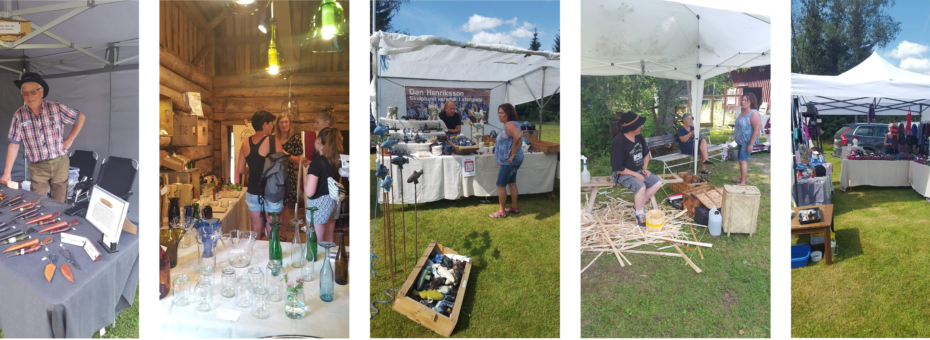
Ugglebo Handmade dolls, mat weaving,
handcrafts, oil painting
Avradsberg exhibitions
of nakedness, photos, poetry, Russian oil paintings, open at night and a
midnight concert
Rihimäki Wille
Toors plays fiddle and exhibits paintings
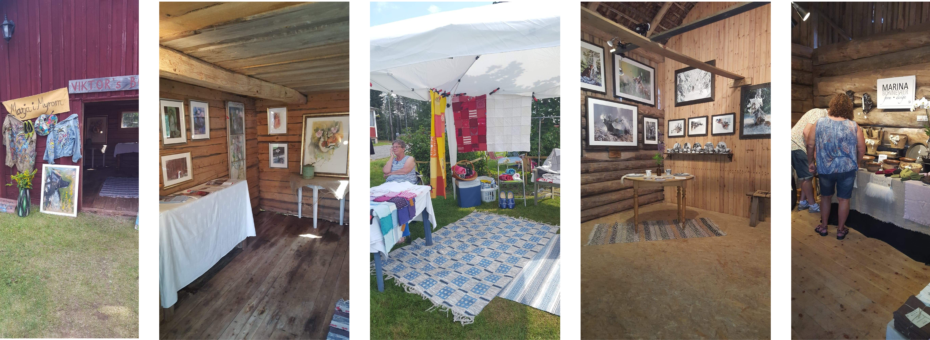
Mattlaberg paintings, photographs, country
livestyle
Brunnberg paintings, stone
sculpture
Gropberg blacksmith,
knives, wooden untensils, smoked pork, music
Östra Näsberget young artists exhibition,
Näsbergets history, The handcraft cottage ( wool spinning,goldsmith, blacksmith,
glass painting, hay and bark handcrafts, natural soaps, patchwork, honey and
souveniers) with garden café and bakery
The Finnish
districts (Finnmarken) For nearly seven hundred years Finnland was under Swedish
control and during the first half of the 16th centuary during the reign of king
Karl IX , poor immigrant farmers were invited to populate the forestlands
bordering Norway. They came from eastern Finnland and established colonies.
These were in tax reduced wild untamed areas previously unused for agriculture
usually far away from towns to avoid conflict with the local Swedes. Their logg
buildings were built high off the ground to withstand serious frosts and
utilized proven techniqes and traditions to survive harsh winters and an
unforgiving enviroment. Even today evidence of these hardy Finnish settlers is
still in exsistence through the minds culture and traditions of todays people
through the forests, the lakes and hard toiled land.